Friday, 29 June 2012


Cinderella

Look what I bought for 50p! This Ladybird edition of Cinderella is so beautiful that I had to share it with you. Of course we all know the 'Bibbidi bobbidi boo' of Walt Disney's Cinderella (which I will include), but this book is even lovelier. So here it is, the front cover and my favourite illustration. 

Cinderella is such a fascinating story, and so embedded in our culture. Cinderella is the archetypal oppressed hero, who is ultimately rewarded. Her repression is perhaps typical of women throughout history. Her reward, true love; seems to have informed modern ideas of romance.

And what is with the shoes? For a start, glass slippers sound clammy, cold and unflattering. Secondly, if Cinderella's clothes turned to rags at midnight, then her shoes should have done too. Then there is the strangeness of the idea of tracking down your beloved using her shoes. This had been done before, in the tale of Rhodopis, which was recorded by Strabo in the 1st century BC.

 'when she was bathing, an eagle snatched one of her sandals from her maid and carried it to Memphis; and while the king was administering justice in the open air, the eagle, when it arrived above his head, flung the sandal into 
p95
his lap; and the king, stirred both by the beautiful shape of the sandal and by the strangeness of the occurrence, sent men in all directions into the country in quest of the woman who wore the sandal; and when she was found in the city of Naucratis, she was brought up to Memphis, became the wife of the king'

That seems to be the root of the 'what is with the shoes?' question, I wasn't expecting to answer it so thoroughly. But it leaves my Ladybird book looking pretty new in comparison. On a less highbrow note, here's 'Bibbidi Bobbidi Boo', as promised. 


 Text on Strabo courtesy of http://penelope.uchicago.edu/Thayer/E/Roman/Texts/Strabo/home.html

Macbeth

Found a piece of schoolwork that I was so proud of aged 14. I love Macbeth, and this is an illustration of a quotation from the play. 

'look like the innocent flower
But be the serpent under't'

These two lines  (spoken by Lady Macbeth in Act 1, Scene 5, when she is convincing Macbeth to murder King Duncan) are splendid, as is the whole play. There was an amazing - and very bloody- production of it in 2010 at Shakespeare's globe. The Roman Polanski film, although very naked, is also worth watching.


Diary

My first post on Crucial Detail was all about my diaries, and the level of excitement in them didn't bode very well for blogging. But now I'm one week older, so much wiser, and I've found my very first diary. It is almost a parody of a little girl's diary: fluffy, purple and sparkly. And inside it are some real gems: 'I had a party';  'I don't now', which I assume is supposed to read 'I don't know'; and 'I kissed the baby'. Rocking from an early age. 


Sunday, 24 June 2012


Flamingoes in Kensington

I went along to the roof garden on High Street Kensington. It's free to visit during the day, and  extraordinary- like the Garden of Eden, but with more flamingoes, and a view of London. I love it.

Saturday, 23 June 2012


'Pierrot le Fou', Jean-Luc Godard, 1965

This is possibly the perfect film. It is exciting and beautiful, happy and sad, 'tender and cruel'. I love love love it. 


 The British Museum


Isn't the British Museum absolutely fantastic?
It is an incredible source of inspiration and information. To anybody in London,  I would recommend a visit.
The history of human existence is made more real when one sees artefacts from the era in question.
My favourite bit is probably 'Ginger' the man preserved by sand in Ancient Egypt. I used to give myself nightmares by looking at him, but now I find it astonishing that we can see him- a remnant of a long-gone era, preserved by accident.


Museum of Brands, Packaging and Advertising


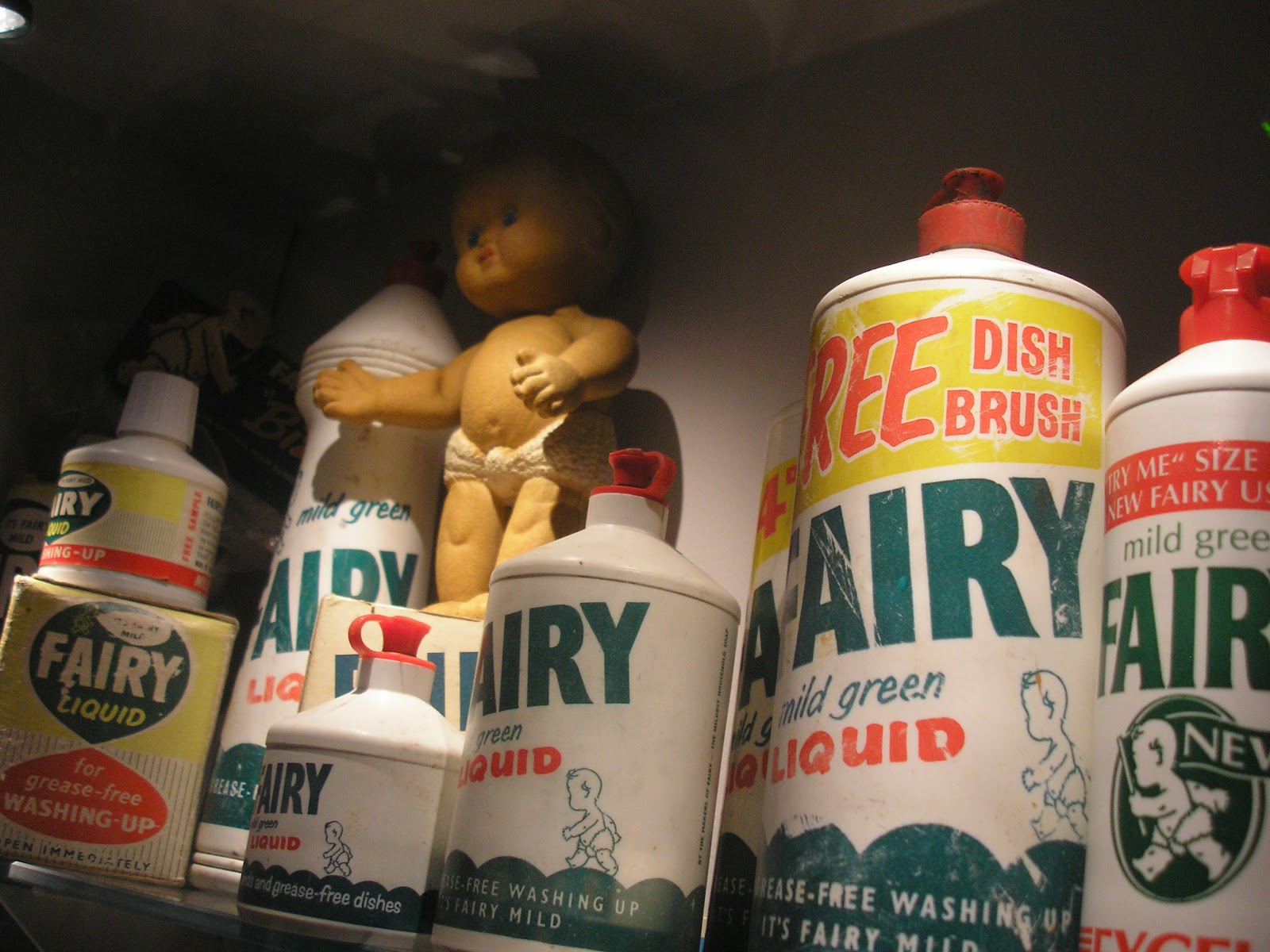
The Museum of Packaging (http://www.museumofbrands.com/) is such a fabulous place to visit. It's a shrine to all things commercial, featuring around 12,000 examples of packaging. Most of these were collected by the consumer historian Robert Opie. As Opie so rightly puts it, 'When the thousands of pieces of our social history are assembled into some giant jigsaw, the picture becomes clearer as to the remarkable journey we have all come through'. This means that the museum is not just a visual feast, but also makes the visitor aware of their cultural history. And, it's right next to Portobello Road!